What is COBRA?
COBRA is a federal law that allows many employees to continue the same employer-sponsored health insurance after leaving their job.
In most cases, you can keep your existing plan for up to 18 months, although certain situations may qualify for longer coverage.
After you leave your job, you'll receive a COBRA election notice explaining:
Whether you're eligible
How much it will cost
When you need to enroll
You can either elect COBRA coverage or choose another health insurance plan.
Why Is COBRA So Expensive?
While you're employed, your employer usually pays a significant portion of your monthly premium.
If you elect COBRA after leaving your job, you'll often be responsible for paying the full premium yourself, plus a small administrative fee.
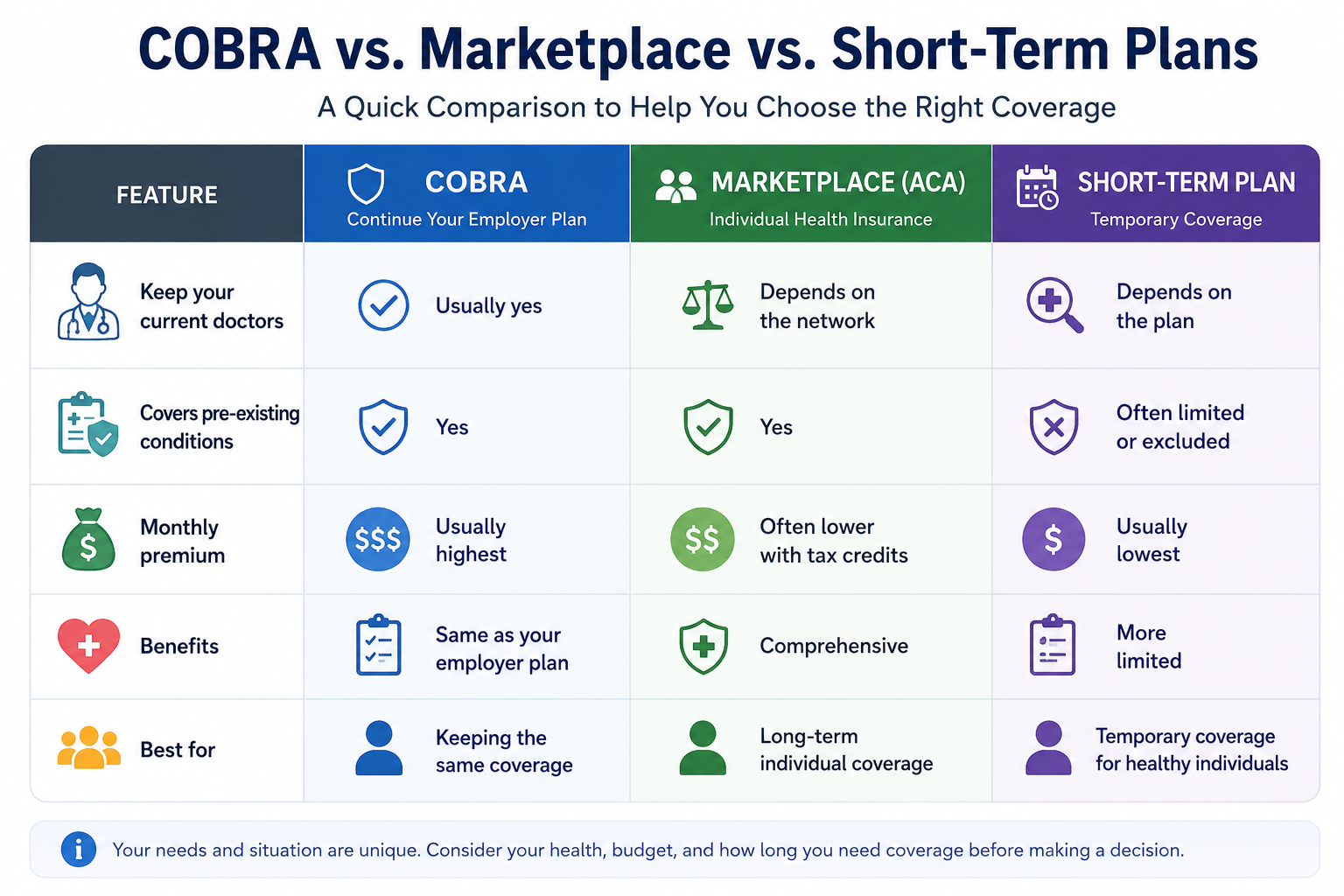
For a family of four, monthly premiums can easily approach $2,000 or more, depending on the employer's health plan.
Some employers may continue contributing toward your COBRA premium for a period of time, but many do not.

What Are Your Other Options?
If you're buying health insurance on your own, you'll generally have two choices:
1. Marketplace (ACA) Health Insurance
Marketplace health insurance plans are sold by private insurance companies through the federal or state Marketplace.

Many people qualify for premium tax credits based on household income, which can significantly reduce the monthly premium.
Marketplace plans must follow important federal consumer protections, including:
Covering pre-existing medical conditions
Charging the same premium regardless of health status
No annual or lifetime dollar limits on essential health benefits
One common misconception is that Marketplace plans are only for low-income families.
In reality, people across a wide range of income levels may qualify for financial assistance, and anyone who is eligible can enroll.
2. Short-Term Health Insurance
Short-term health insurance is designed to provide temporary coverage.
These plans generally cost less than Marketplace plans, but they often provide fewer benefits and may not cover pre-existing medical conditions or certain services.
They can be an option for healthy individuals who need temporary coverage, but it's important to understand the policy limitations before enrolling.
What About HMO and PPO?
Another common question is:
"Will I have an HMO or PPO plan?"
An HMO generally requires you to receive non-emergency care from providers within the plan's network.
A PPO allows you to receive care both in and out of network, although you'll typically pay more when using out-of-network providers.
In Texas, most individual Marketplace plans are HMO or EPO plans.
PPO plans are much more commonly offered through employer-sponsored group health insurance.
Fortunately, many large hospital systems in the Houston area—including Memorial Hermann, Houston Methodist, and St. Luke's—participate in Marketplace HMO networks.

Which Option Is Right for You?
COBRA may be a good choice if:
You want to keep your current doctors and hospitals.
You're in the middle of treatment.
Cost is less important than maintaining the same coverage.
A Marketplace plan may be a better fit if:
You're looking for comprehensive long-term coverage.
You want to lower your monthly premium.
You have pre-existing medical conditions.
You qualify for premium tax credits.
A short-term plan may be worth considering if:
You only need coverage for a short period.
You're generally healthy.
You understand the plan's coverage limitations.
Good News: Losing Your Job Creates a Special Enrollment Opportunity
When you lose employer-sponsored health coverage, you generally qualify for a Special Enrollment Period (SEP).
That means you don't have to wait until Open Enrollment to purchase a Marketplace health insurance plan.
Need Help Comparing Your Options?
You can enroll in a Marketplace plan yourself through HealthCare.gov, or you can work with a licensed health insurance agent.
The premium is the same either way—you don't pay extra for using an agent.
If you'd like help comparing COBRA, Marketplace plans, or short-term coverage, contact Zip Insurance.
We'll explain your options, compare costs and benefits, and help you choose the plan that best fits your needs.


