Today Zip Insurance will take you to learn more about medical insurance. You can watch our video or read below
1. What are HMO, EPO and PPO Plans?
These are the three most common types of health insurance plans.
Each plan has its own provider network.
Doctors, specialists, hospitals, and clinics that have contracts with your insurance company are considered in-network. Providers without a contract are out-of-network.

How Does a Provider Network Work?
Insurance companies negotiate reimbursement rates with doctors and hospitals.
If both sides agree on pricing and contract terms, the provider joins the insurance company's network.
For example:
An insurance company offers to pay a doctor $30 for a certain office visit.
If the doctor accepts those terms, they become in-network.
If the doctor believes the payment is too low and wants $50 instead, and no agreement is reached, they remain out-of-network.
That's why not every doctor accepts every insurance plan.
2. The difference between HMO/EPO and PPO
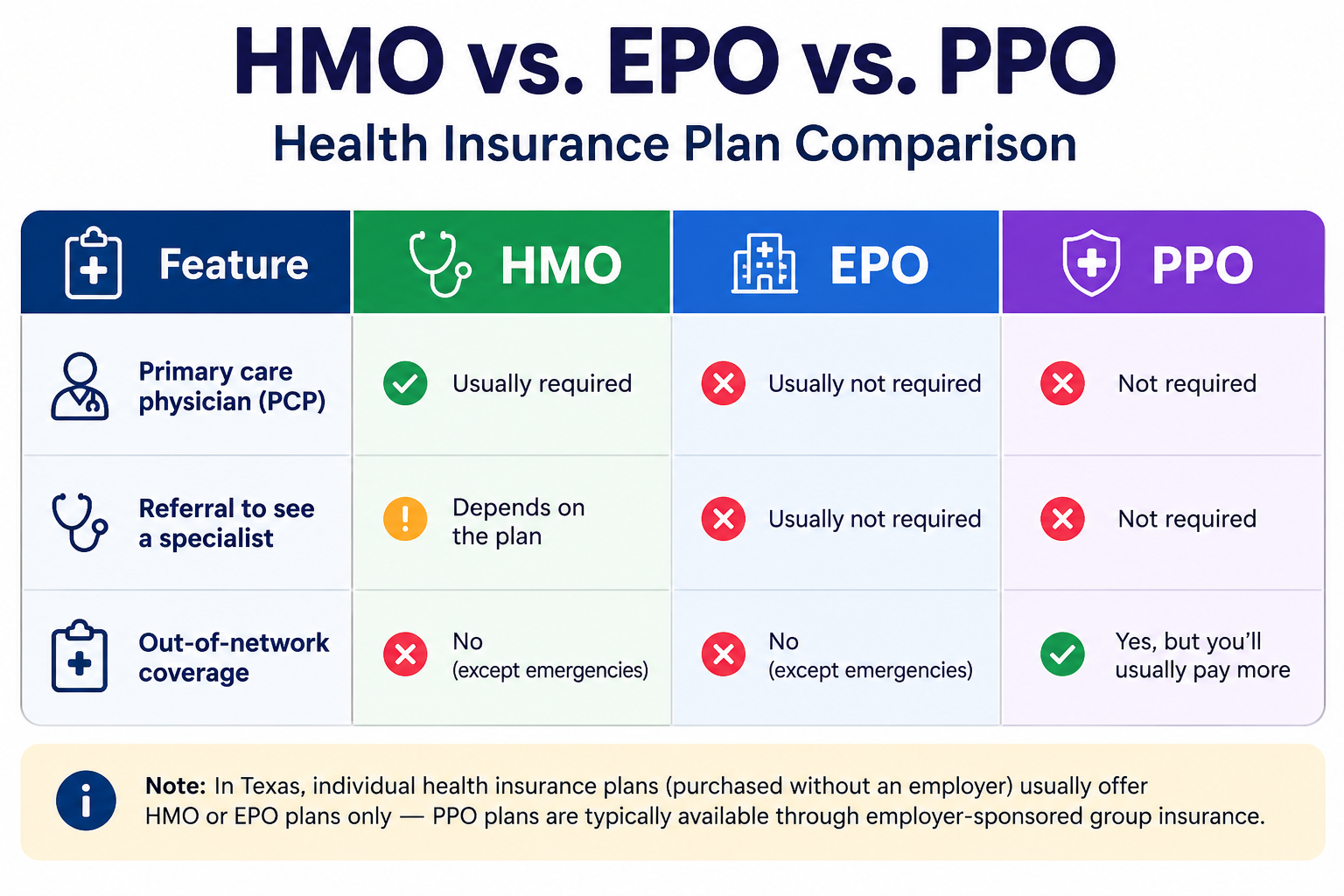
he biggest differences come down to three questions:
Do you need to choose a primary care physician (PCP)?
Do you need a referral to see a specialist?
Does the plan cover out-of-network care?
A Note for Texas Residents
If you're buying an individual or ACA (Marketplace) health insurance plan in Texas, PPO plans generally are not available.
Most individual plans are HMO or EPO plans.
The good news is that many HMO and EPO plans sold in Texas today no longer require referrals to see specialists. However, you still need to use in-network providers for non-emergency care.
PPO plans are much more common through employer-sponsored group health insurance.
For most people buying their own insurance, choosing an HMO or EPO plan with a strong provider network is often the best value.

3. What If I Have an Emergency Outside the Network?
This is another question we get all the time.
What if I'm traveling or away from home and need emergency care at an out-of-network hospital?
The good news is:
Yes. Emergency medical care is generally covered, even if the hospital is out of network.
For true emergencies, HMO and EPO plans typically process your emergency care using your in-network benefits, as required under federal law.
What Counts as an Emergency?
Not every urgent medical issue is considered an emergency.
For example, a common cold, mild flu, or a sore throat usually doesn't qualify as an emergency.
However, emergency conditions may include:
Chest pain or symptoms of a heart attack
Serious injuries from an accident
Difficulty breathing
Loss of consciousness
Severe bleeding
Stroke symptoms
Other life-threatening medical conditions
If a reasonable person believes their health or life is in serious danger, emergency care is generally covered—even at an out-of-network emergency room.
Still Have Questions?
Choosing the right health insurance isn't just about the monthly premium. Understanding your provider network and how your plan works can help you avoid unexpected medical bills.
If you have questions about your health insurance or need help comparing plans, feel free to contact Zip Insurance. Our licensed agents are happy to help you understand your options and choose the coverage that fits your needs.


